
Search Pennsylvania Traffic Court Records
Start with the Unified Judicial System Case Search. Most Pennsylvania citations originate in a Magisterial District Court. Philadelphia traffic matters use Municipal Court's Traffic Division, while Pittsburgh follows its local minor-court structure. Choose the matching court level and use the citation number when possible. Keep the dash in the number, as in the official format A5368532-1. A participant-name or docket-number search can help when the citation number is unavailable. Results are public docket information, not the official case file.
The issuing court controls its Pennsylvania traffic record. If the portal omits a filing, shows a delay, or produces no match, contact the court printed on the ticket. The Pennsylvania county directory routes users to local court sites. Have the citation, docket number, participant name, filing county, and approximate date ready.
| PAePay or Search Field | Type | Required | Use |
|---|---|---|---|
| Payment Type or Court | Selection | Yes | Choose the traffic or financial category shown. |
| Citation Number | Text | Alternative | Include the dash and check each character. |
| Docket Number | Text or segmented | Alternative | Select the correct court level. |
| Participant Name | Text | Alternative | Add county and court filters for common names. |
| County | Dropdown | Conditional | Choose among all 67 counties. |
| Select or Add to Cart | Control | At payment | Verify participant, county, docket, and obligation. |
Pennsylvania Traffic Courts and Venue
Venue depends on where the violation occurred and how it is charged. Magisterial District Judges handle most summary traffic cases and the first proceedings in criminal vehicle cases. Philadelphia Municipal Court replaces that model within Philadelphia. A summary appeal is filed in the Court of Common Pleas and is commonly heard de novo, which means the judge hears the matter anew. Misdemeanor or felony vehicle charges also proceed to Common Pleas after the preliminary stage.
Parking tickets and automated red-light or speed notices may use a civil or local administrative process instead. They do not necessarily create a UJS criminal traffic docket. A police crash report is a third product held by state or local police. The docket, crash report, and PennDOT history cannot substitute for one another.
The Pennsylvania Department of Transportation site leads to the separate driver-licensing system.
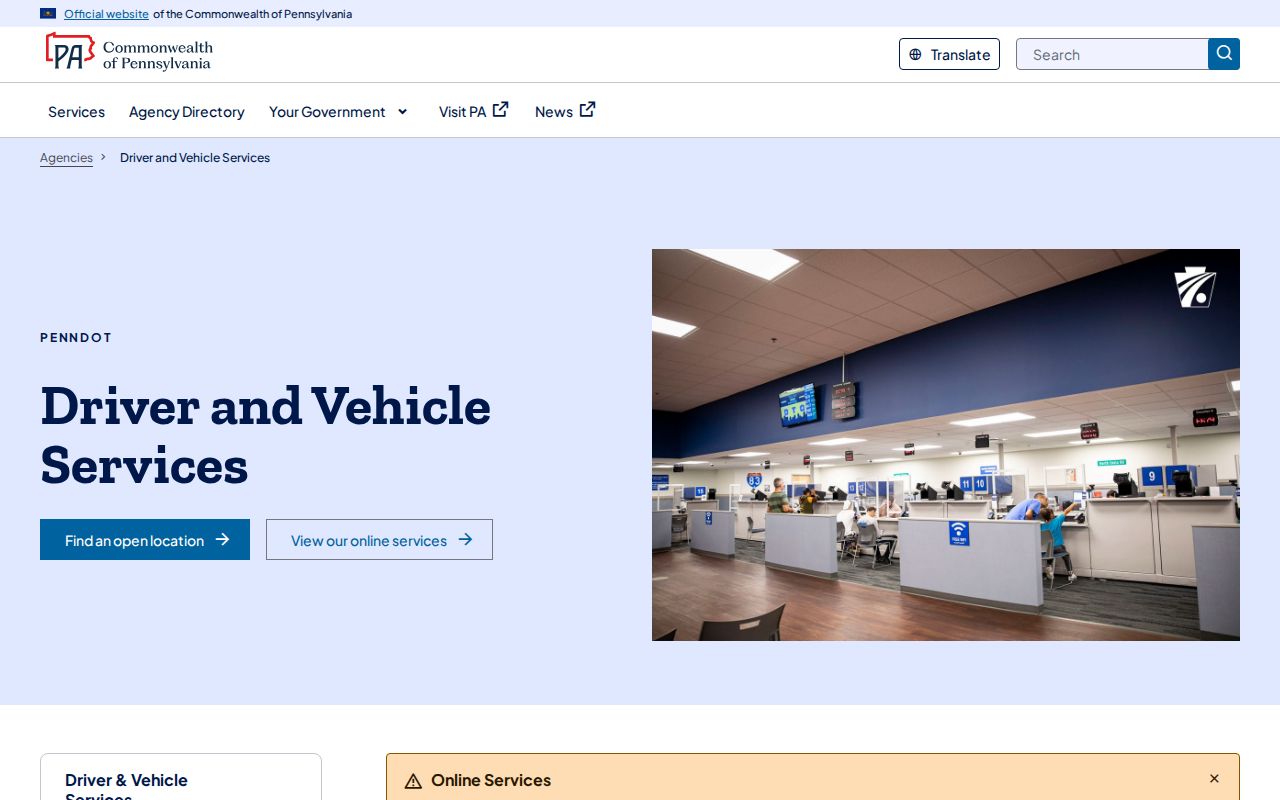
This split explains why clearing a court balance may not complete every PennDOT restoration requirement.
Pennsylvania Traffic Case Types
Moving violations may produce points and licensing effects after conviction. Equipment and other nonmoving matters may carry fines without points, but the governing charge controls. Commercial drivers face added reporting and disqualification rules. DUI is criminal and can create both a Common Pleas case and PennDOT action. Camera and parking matters often follow local civil procedures. Failure to respond or appear can trigger court action, a bench warrant, or a report affecting the license.
Do not infer that a nonpoint citation creates no court record. Likewise, police issuance alone does not place points on a Pennsylvania driver history. The court must report a qualifying conviction before PennDOT applies its administrative result.
Read Pennsylvania Traffic Court Records
A Pennsylvania traffic docket traces the legal case. A closed label should not be read alone. Later entries may show an appeal, a lifted warrant, an installment balance, or a changed order. The latest actual order controls. UJS also cautions that public data can be incomplete or delayed.
- Citation and docket numbers
- The police-issued identifier and the court's case identifier.
- Charge and statute
- The alleged Vehicle Code or other offense before the court.
- Plea and disposition
- The response entered and outcome, such as guilty, not guilty, withdrawn, or dismissed.
- Financial entries
- Assessments, fines, costs, payments, and eligible balance data.
- Procedural events
- Hearings, continuances, warrants, appeals, and orders.
Points remain a PennDOT consequence after a reportable conviction. The court docket may show the conviction, but PennDOT controls the point total and license status.
Use Pennsylvania PAePay Carefully
The official PAePay financial-record portal searches eligible citations and obligations. Review the participant, county, docket, and balance before adding a case to the cart. An absent case may be ineligible, newly filed, restricted, closed, or entered under different criteria. It does not prove that no balance exists.
Official guidance says an online traffic payment ordinarily acts as a guilty plea. PAePay limits fines, costs, and restitution payments to $2,500 per transaction and cannot create a payment plan. Save the card confirmation, then verify the court disposition. A receipt alone does not prove that a warrant or PennDOT suspension has cleared.
The official Pennsylvania PAePay source shows the matching and payment controls.
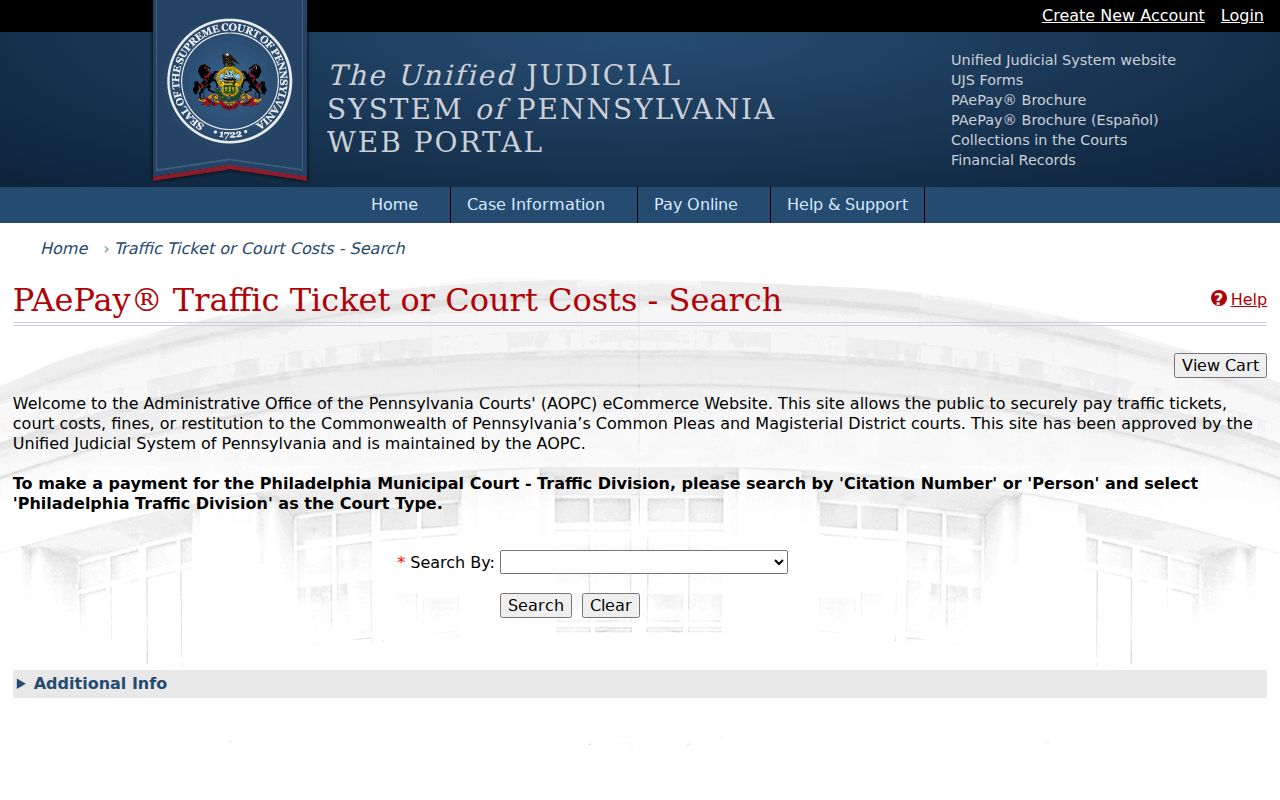
These controls make identity and docket checks vital before payment becomes final.
Pay or Contest Pennsylvania Tickets
The response deadline and methods printed on the citation control. Do not wait for an online record. A guilty payment can create a conviction and lead to PennDOT reporting. A not-guilty response starts the hearing process and may require collateral under Pennsylvania procedure. Unlike states that broadly use defensive-driving dismissal or deferred adjudication, Pennsylvania treatment depends on the charge, disposition, and applicable law.
- Read the ticket for the issuing court, charge, citation number, deadline, and plea instructions.
- To plead guilty, use eligible PAePay or the court's mail or counter method. Review licensing effects first.
- To contest, enter a timely not-guilty plea and provide any required collateral. Keep the hearing notice.
- Attend the hearing and read the decision and appeal notice at once.
- Ask the court about installments if payment is not possible. PAePay cannot set a plan.
- Check a fresh docket and PennDOT history after resolution because the two systems update separately.
Missing a response or appearance can cause court and licensing consequences. A summary appeal proceeds to Common Pleas under the short deadline stated by rule or notice.
Pennsylvania Traffic Record Access
Court access follows Unified Judicial System public-record policies, not the ordinary agency route under the Right-to-Know Law. A public docket does not open sealed documents, confidential information forms, juvenile files, or protected identifiers. Ask the issuing court for inspection, copies, certification, or the review process when material is withheld.
PennDOT histories are protected personal records. Federal Driver's Privacy Protection Act rules and the state process require a lawful basis or subject authorization where applicable. They are not open name-search records. The requester must supply the identity, product choice, authorization, and intended-use information required by the form.
Note: A missing result means only that it was not located in the public electronic index, not that no citation exists.
Order a Pennsylvania Driver Record
The PennDOT Bureau of Driver Licensing holds the separate administrative history. The official Pennsylvania driving-record service offers basic, three-year, ten-year, full, certified, and file-document products. A history can show identity, product date, class and status, reported convictions, points, suspensions, revocations, restorations, and departmental actions within its scope. It does not reproduce testimony, the citation narrative, or a full docket.
After a reportable conviction, the court sends the disposition into the licensing process. PennDOT then applies the action required by law. The two files may update at different times. The research establishes no fixed lag, so compare current records. The court corrects its docket. PennDOT handles the downstream history and restoration account.
Ordering requires the driver's name, Pennsylvania license number, birth date, address, record type, requester data, fee, and lawful-use or authorization information when needed. Online requests use accepted cards. Mail requests use the current form and check or money order payable to the Commonwealth. Select a certified product when certification is required.
Pennsylvania Court vs Driver Records
The case answers what police alleged and what the court did. The driver history answers what PennDOT recorded for licensing. Access and corrections differ. When a conviction entry is wrong, obtain the certified court disposition before asking PennDOT to update its downstream file.
| Point | Court Traffic Record | PennDOT Driver Record |
|---|---|---|
| Source | MDJ, Philadelphia Municipal Court, or Common Pleas | PennDOT Bureau of Driver Licensing |
| Contents | Charge, plea, hearing, disposition, fine, payment, warrant, appeal | Status, convictions, points, suspensions, restorations, product-period history |
| Access | UJS search, PAePay for eligible obligations, or issuing court | Authorized online or mail history request |
| Correction | Ask the court custodian about its entry or order | Use PennDOT's administrative correction process |
Pennsylvania CDL Traffic Records
Commercial drivers face state and federal reporting and disqualification rules. A disposition that seems minor can affect a commercial license or employer notice duty. Pennsylvania research does not support a blanket promise of defensive-driving dismissal or deferred adjudication for CDL holders. Before pleading, a commercial driver should check the precise charge and obtain advice when needed.
Moving violations may add points after conviction. Nonmoving matters can carry fines without points, but classification depends on law. PennDOT's point-system information explains hearings, suspensions, and point removal.
Pennsylvania DUI Traffic Cases
DUI is criminal in Pennsylvania. It commonly begins before an MDJ and moves to Common Pleas. The Clerk of Courts holds the criminal file, while PennDOT administers separate license consequences. Charges, ARD, a plea, sentence, and later expungement activity must be read from the chronology. Pennsylvania arrest and court charge records explain the criminal filing path.
Payment does not erase a docket. Limited access or expungement is charge and disposition specific. A public-search omission is not proof that the event never existed.
Pennsylvania Traffic Record Limits
Sealing, limited access, and expungement under Pennsylvania Crimes Code Chapter 91 depend on the offense and disposition. Clean Slate limited access is not the same as destruction through expungement. Public dissemination can be blocked while authorized justice agencies retain access. A separate PennDOT record must be addressed through the licensing rules that govern it.
Pennsylvania Points and Restoration
Clearing the case may be only one part of restoration. PennDOT can require a fee, proof, completion of a suspension, insurance or medical material, or resolution of several cases. The official restoration requirements letter or account controls. A Common Pleas license-suspension appeal is its own docket, distinct from the citation and PennDOT file.
The official PennDOT fee source lists current charges.
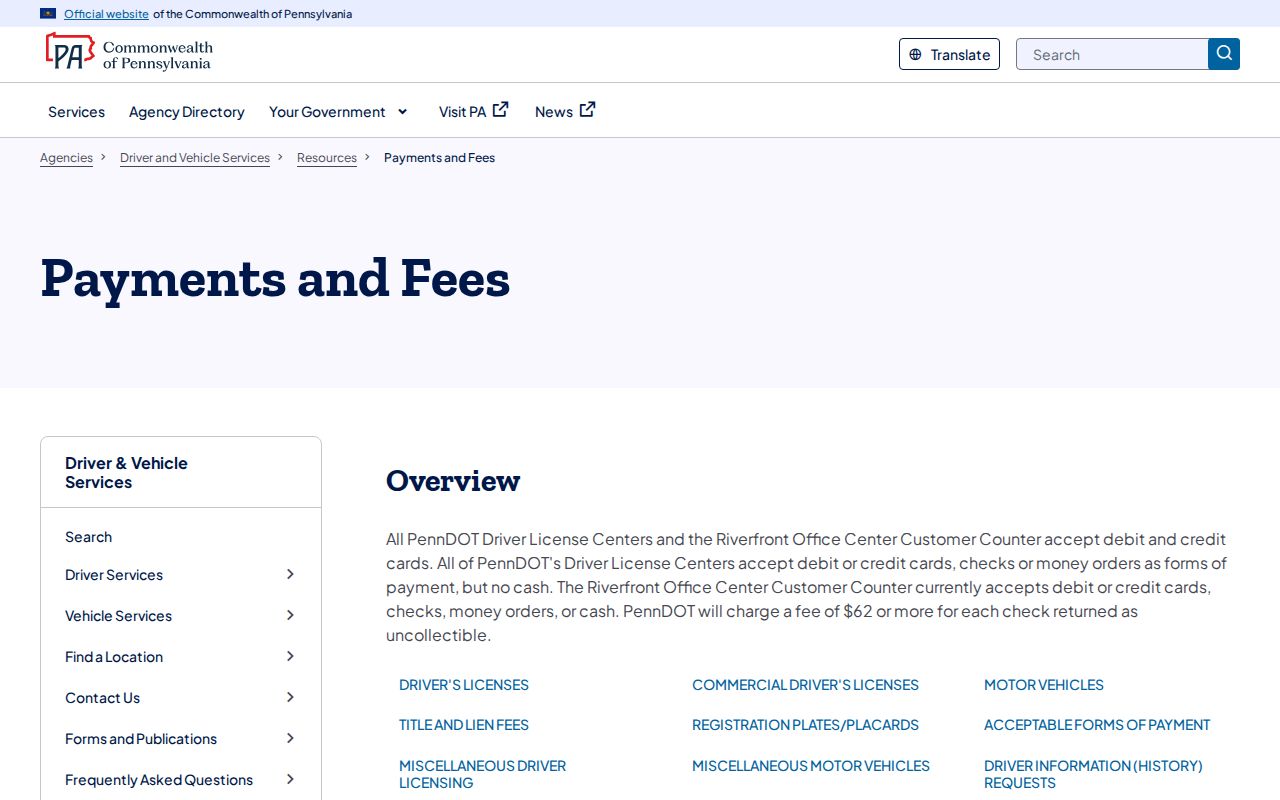
Agency charges and court obligations differ, so identify the exact product or balance before payment.
Pennsylvania Traffic Record Fees
UJS docket search and printing are free. A court may charge for pages, certification, archive retrieval, or postage. No single copy total governs every minor court and county. Ask for an estimate. PennDOT prices are statewide.
| Item | Amount |
|---|---|
| UJS docket search or print | Free |
| Court plain or certified copy | Current custodian schedule |
| Basic, 3-year, 10-year, full history, or file document | $15 |
| Certified driver record or certified file document | $46 |
| PAePay obligation | Balance shown, maximum $2,500 per transaction |
A card or convenience charge is distinct from the fine. Contact the court about plans, refunds, restitution, or a balance that conflicts with the docket. Use the directory of 67 Pennsylvania counties to reach the issuing court for certified copies and older traffic records.