
Pennsylvania's Split Clerk Structure
Pennsylvania preserves distinct row-office functions. Civil and much family litigation usually routes to the Prothonotary. Common Pleas criminal matters route to the Clerk of Courts. Estates go to the Register of Wills, while Orphans' Court proceedings and marriage licenses route to the Clerk of the Orphans' Court. Minor-court and appellate files have different custodians again. A county may combine elected titles or place several functions in one department, but that local label does not merge the legal record classes.
Prothonotaries, Clerks of Courts, Registers of Wills, and Recorders of Deeds are commonly county elected offices with four-year terms, subject to home-rule charters and local consolidation. Some counties elect one person as Prothonotary and Clerk of Courts while keeping civil and criminal divisions distinct. Others combine Register of Wills and Clerk of the Orphans' Court. The safest request names the function, not merely "county clerk."
Pennsylvania Prothonotary Records
The Prothonotary is the civil clerk of the Court of Common Pleas. This office commonly accepts civil pleadings, assigns docket numbers, preserves judgments and liens, and maintains mortgage foreclosure, name-change, protection-from-abuse civil docket, divorce, and much family-case material. Local Family Division assignments can differ. A plaintiff-versus-defendant caption generally points toward civil custody, while petitioner/respondent language may identify divorce or custody work. Search the public docket or county civil index first, then order the actual pleading or order from the county office.
For a divorce decree, final custody order, civil complaint, or certified judgment, provide the county, docket, names, year, and exact document title. Older Pennsylvania civil records may remain in index books, microfilm, or archive boxes even when they do not appear in the statewide electronic index. Ask which office or archive holds the series.
Pennsylvania Criminal and Estate Clerks
The Clerk of Courts keeps Common Pleas criminal dockets and papers, including informations, pleas, verdicts, sentence orders, and criminal costs. A "Commonwealth v." caption and CP criminal docket belong here, even if the same elected official also holds the Prothonotary title. Preliminary complaints and hearings remain with the filing Magisterial District Court or Philadelphia Municipal Court. One prosecution can therefore require requests to two clerk offices.
The Register of Wills accepts wills for probate, letters testamentary or administration, estate indexes, inventories, and accounts. The Clerk of the Orphans' Court keeps its petitions and orders, including guardianship matters, and commonly handles marriage licenses and returns. Adoption and some guardianship records are restricted. Marriage copies come from the issuing county. A private will does not become the same public estate record merely because someone possesses a copy.
| Record | Pennsylvania Custodian | Best First Route |
|---|---|---|
| Civil, judgment, divorce, much family litigation | County Prothonotary | County civil search, counter, or mail request |
| Common Pleas criminal case | County Clerk of Courts | UJS docket, then criminal division for documents |
| Estate and probate papers | Register of Wills | County register index, counter, or mail |
| Orphans' Court and marriage | Clerk of the Orphans' Court | Issuing or filing county office |
| Traffic, summary, preliminary criminal, limited civil | Named MDJ or Municipal Court clerk | UJS docket, then the listed court |
| State appeal | Supreme, Superior, or Commonwealth Court prothonotary | Appellate docket, then named court office |
What Pennsylvania Court Clerks Do
Each Pennsylvania custodian accepts filings within its record class, maintains the official file and docket, receipts authorized fees, protects confidential material, and supplies permitted copies. Clerks may issue process or certified records within their assigned authority, but they cannot select legally significant papers, interpret an order, or give legal advice. Certification authenticates a copy from the custodian. It does not certify that allegations are true or that no later order exists.
The Unified Judicial System public-record policies govern court case access. A court pleading or decree follows judicial access procedure, not an ordinary Right-to-Know request. Administrative county records may follow a different route. If a filing is withheld or redacted, preserve the response and use the review process tied to the cited policy, statute, or sealing order.
Request Certified Pennsylvania Court Records
A plain copy reproduces a public page. A certified copy adds the clerk's seal or certification. An exemplified copy adds formal judicial and clerk authentication and is usually ordered only when another court or jurisdiction requires it. A screenshot of a UJS docket does not replace any of these. Identify the exact source office before sending money or a request.
- Determine the filing county, court level, division, approximate year, and desired product. Use the Pennsylvania county directory to reach the correct office.
- Search UJS or the county index for the docket, estate, or license number. Confirm names and the precise paper needed.
- Ask the custodian for page count, certification type, archive retrieval needs, total cost, accepted payment, and delivery choices.
- Submit the written request in person, by mail, email, secure portal, or local system where the office permits that channel.
- Check the seal, docket, document title, and date on receipt. Obtain a newer order if later docket activity may affect the result.
Note: A delivery preference does not require a Pennsylvania clerk to convert an unavailable paper record into the requester's chosen format.
Pennsylvania Clerk Request Fields
The UJS Request for Access to Case Records is sent to the applicable custodian, not centrally to AOPC unless AOPC holds the requested record. A precise request avoids costly searches and delay. One form may be needed for each court when records span an MDJ and Common Pleas.
| Field | What to Supply | Why It Matters |
|---|---|---|
| Requester details | Name, address, city, state, ZIP, telephone or email, date, and signature | Supports response and delivery |
| Case identity | Case name and docket number if known | Separates similar names and proceedings |
| Record description | Exact pleading, order, decree, information, inventory, or license record | Defines existing pages instead of asking for a narrative |
| Time and place | Filing county, court level, division, and approximate year | Routes archives and split offices correctly |
| Copy type | Inspection, electronic or paper plain copy, certified copy, or exemplification | Controls processing and fee quote |
| Delivery details | Preferred method, return address, and cost ceiling or invoice request | Prevents payment and mailing disputes |
Pennsylvania Clerk Fees
Pennsylvania has no single retail fee schedule that covers all 67 county row offices. State-authorized components combine with county charges, automation or records-improvement surcharges, certification, archive retrieval, postage, and vendor fees. Do not use one county's price as a statewide quote. Request a page count and written estimate before copying a large file.
| Product or Action | Statewide Rule | County Detail to Confirm |
|---|---|---|
| UJS docket search and print | Free public search | Filed images may not be included |
| Plain court copy | County or court schedule | Per-page, search, retrieval, media, and postage |
| Certified or exemplified copy | County or court schedule | Page fee, seal, certification, and added authentication |
| Civil or divorce filing | State and local components bundled by county | Service, publication, and other costs can be separate |
| Estate, letters, or Orphans' Court filing | County itemized or value-based schedule | Short certificates, advertising, tax, and petitions may add cost |
| RTKL duplication | OOR schedule applies to covered agency records | It does not replace judicial case-record fees |
An in-forma-pauperis petition may waive qualifying filing costs after financial review. It does not automatically waive service, transcripts, vendor charges, certification, or unlimited copies. Inspection or electronic delivery may reduce cost when the office allows it.
Pennsylvania Forms and E-Filing
The UJS forms collection includes statewide and court-specific forms. PACFile provides electronic filing for supported Pennsylvania matters, while local civil, estate, and marriage systems differ by county. Public Case Search requires no account, but PACFile and secure professional functions require credentials. A county may use a designated official vendor, a local portal, mail, or counter filing. Follow the current office instructions rather than assuming all record types accept one statewide upload.
Mail requests should state the exact record and copy type, provide a return address and daytime contact, and ask for an invoice or set a maximum authorized cost. Confirm the payee and accepted payment before mailing. Ordinary email can be useful for an estimate but is not suitable for Social Security numbers, full driver numbers, confidential exhibits, or other sensitive data.
Pennsylvania Minor and Appellate Clerks
Traffic, nontraffic summary, landlord-tenant, limited civil, and preliminary criminal records route to the specific Magisterial District Court shown on the docket. Philadelphia Municipal Court uses its own clerk structure. State appeals route to the prothonotary for the Supreme, Superior, or Commonwealth Court. These offices are not substitutes for a county Prothonotary or Clerk of Courts.
Federal cases form another separate system. The Eastern District of Pennsylvania clerk serves federal matters in that district.
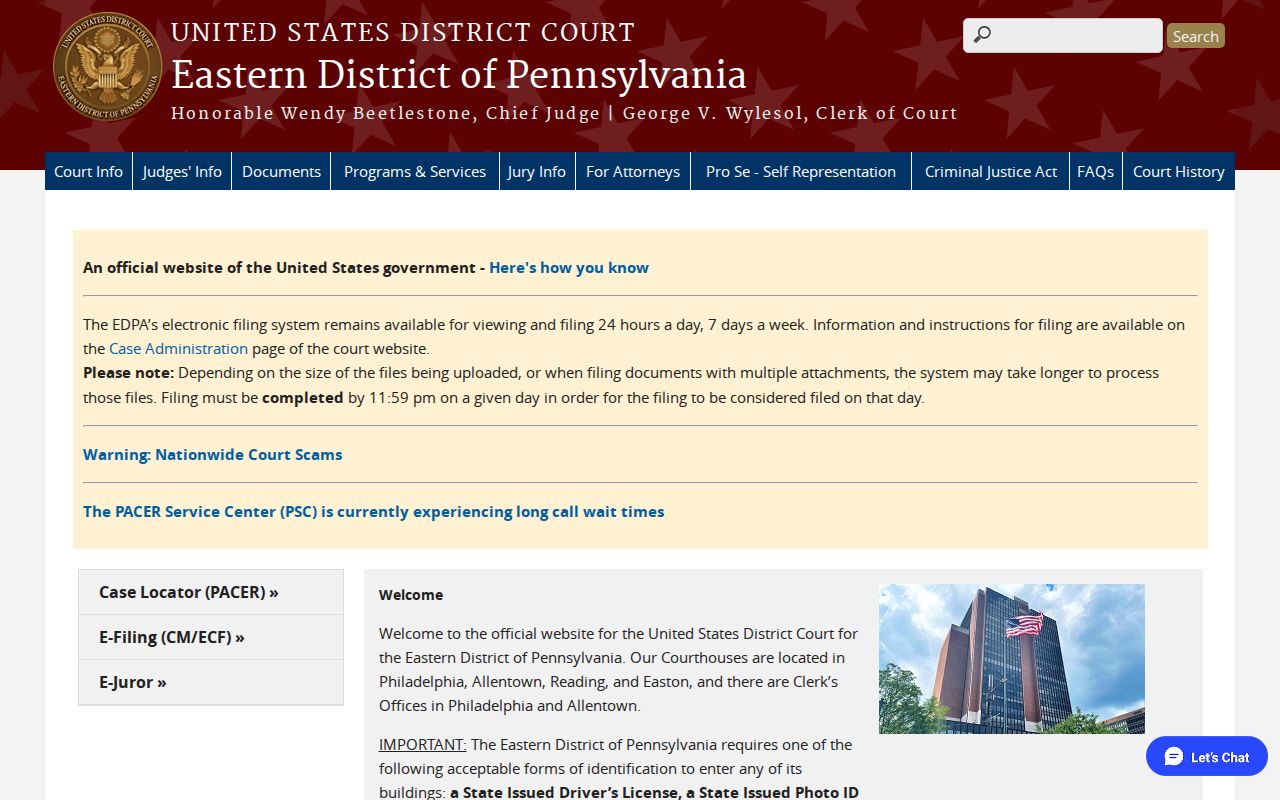
Its docket and certified records do not come from a Pennsylvania county row office.
The Middle District of Pennsylvania clerk is the federal custodian for that district's cases.
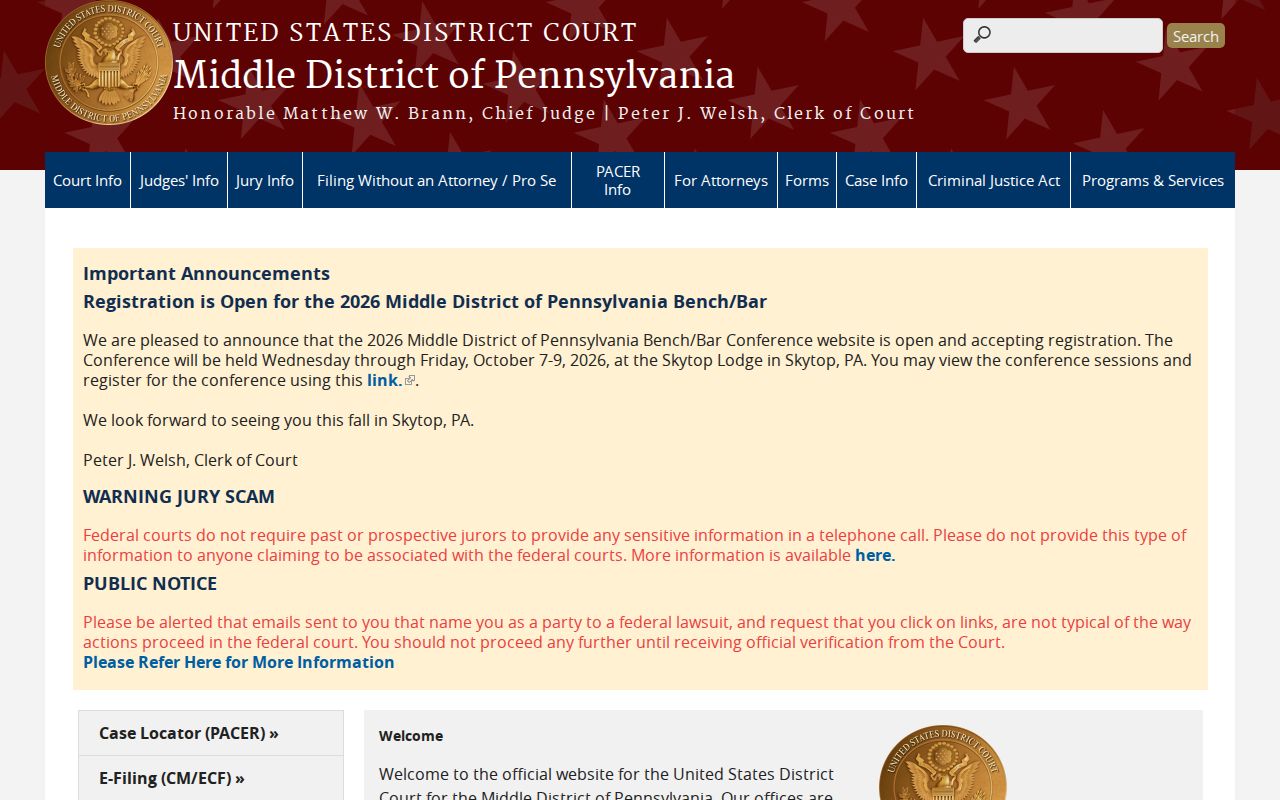
A related state case can exist, but it has a separate docket, prosecutor, and clerk.
The Western District of Pennsylvania clerk supplies its own federal records and certification.
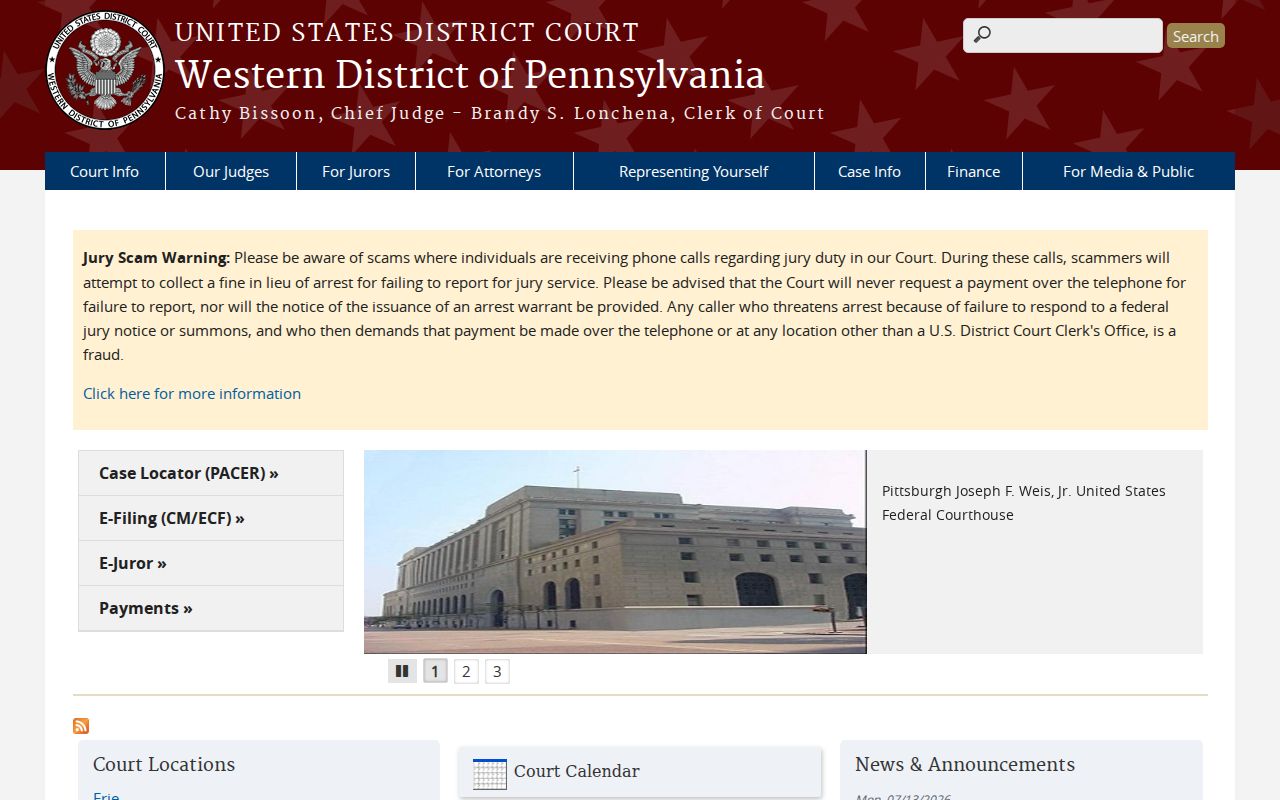
County and state court searches will not retrieve that federal filing.
The Third Circuit clerk handles federal appeals from Pennsylvania's district courts.
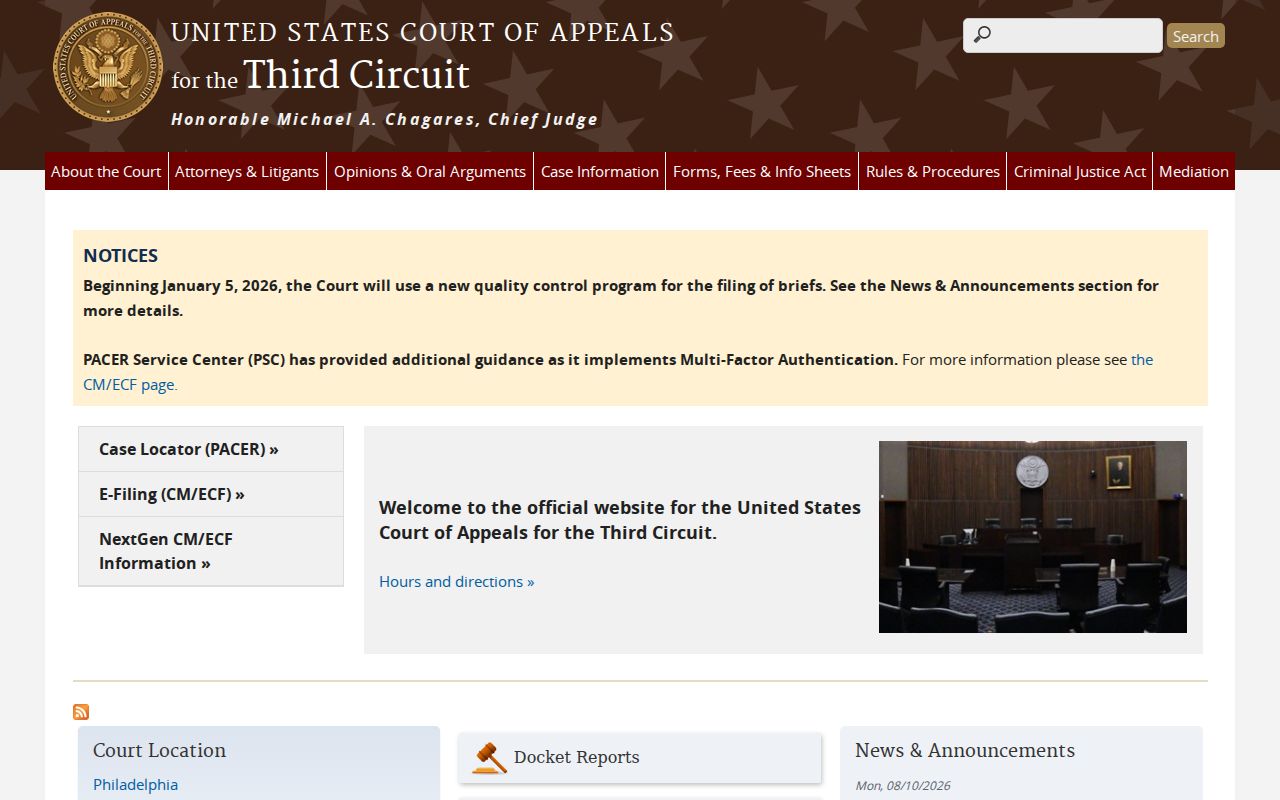
That federal appellate route is distinct from Pennsylvania's Superior, Commonwealth, and Supreme Courts.
The PACER Court CM/ECF Lookup routes users to the correct federal filing system.
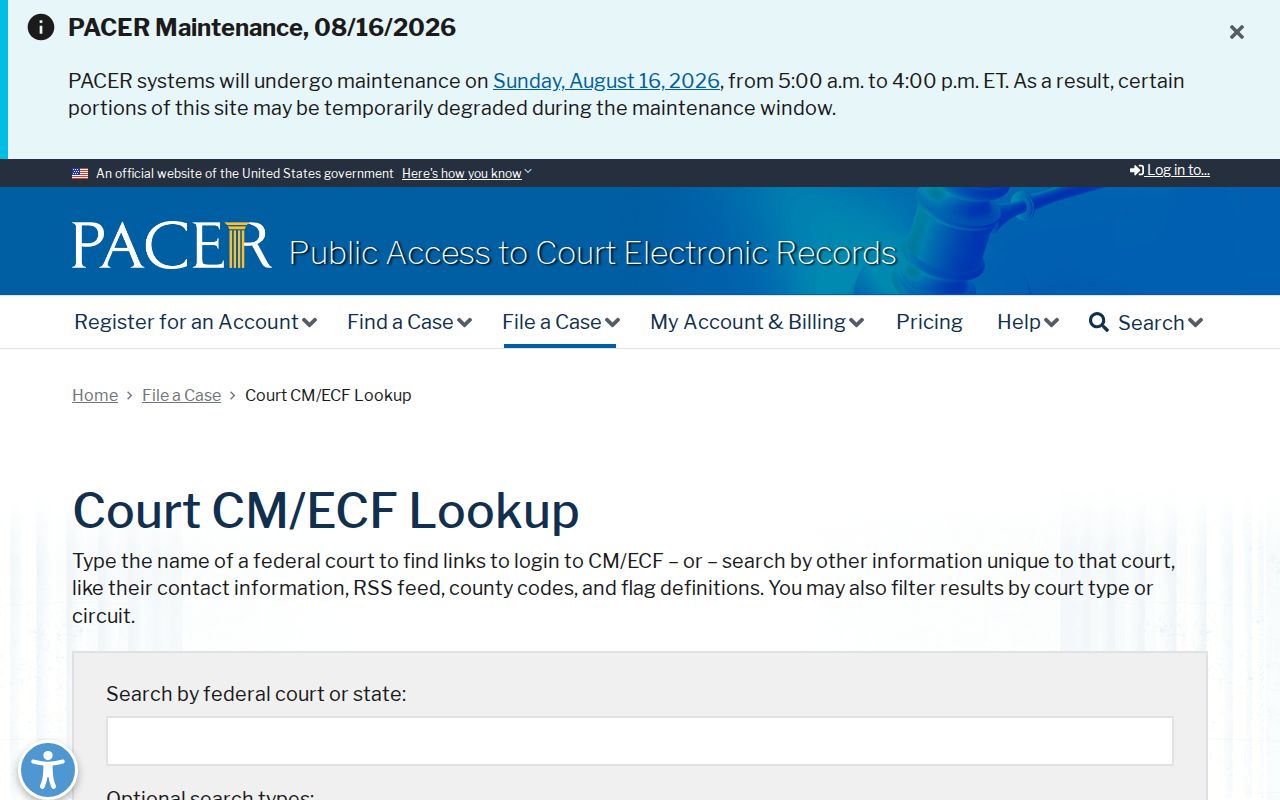
Certified federal records still come from the relevant federal clerk, not from PACER or a Pennsylvania county office.
Find Pennsylvania County Clerks
Use the full directory of 67 Pennsylvania counties to locate the Prothonotary, Clerk of Courts, Register of Wills, or Clerk of the Orphans' Court that holds the record. County pages provide the locally verified address, hours, phone, portal, archive practice, and fee schedule. A shared judicial district does not merge county row offices, and a county seat is not a substitute for the office's current mailing address.
Note: Identify county, court level, record function, year, and copy type before contacting a Pennsylvania clerk to avoid a false negative.