
Pennsylvania Court Hierarchy
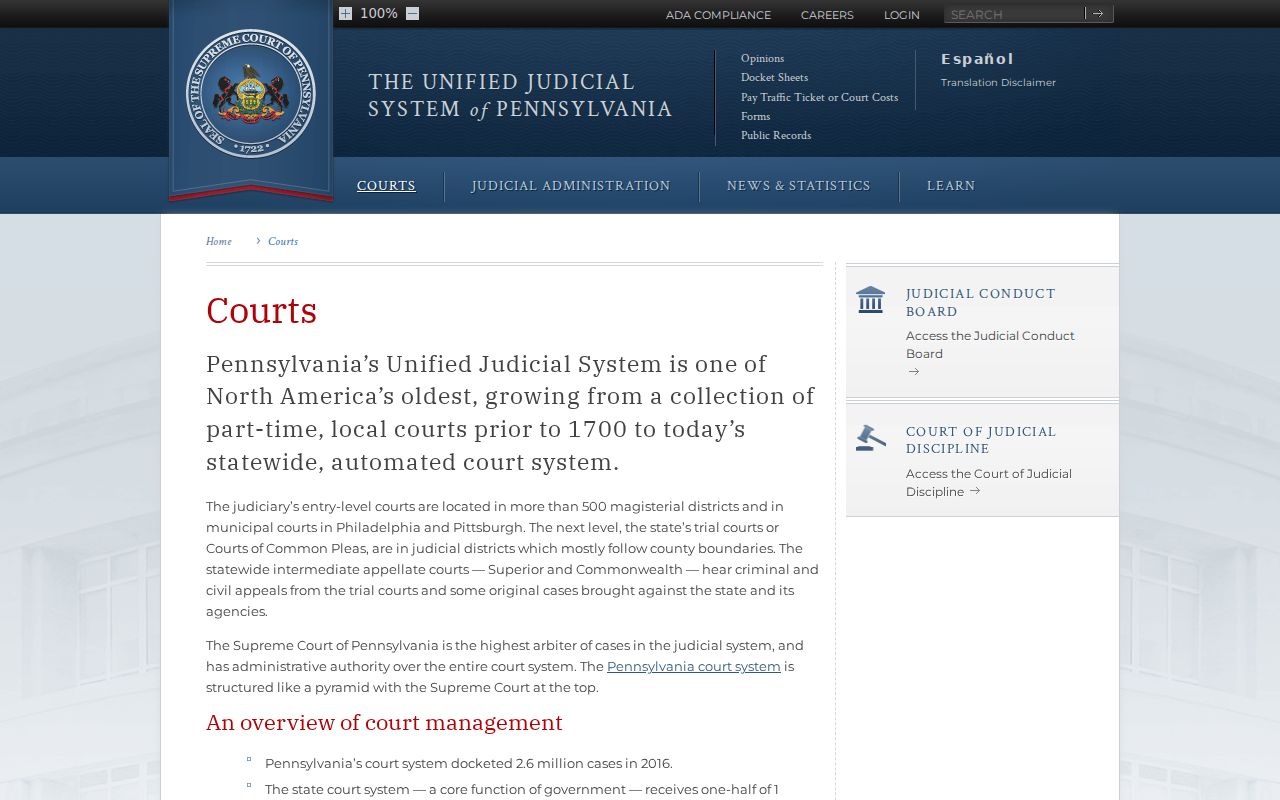
Pennsylvania's Unified Judicial System forms a statewide pyramid. The Supreme Court stands at the top. Superior Court and Commonwealth Court are separate statewide intermediate courts, divided by subject matter instead of geographic districts. Courts of Common Pleas provide general trial jurisdiction through 60 judicial districts serving all 67 counties. Magisterial District Courts and the Philadelphia Municipal Court handle the lower tier, while Pittsburgh Municipal Court operates within Allegheny County Common Pleas.
The official Pennsylvania courts directory identifies each level and its statewide role.
Unified administration does not create one physical record warehouse. The court or county office that filed a complaint, order, exhibit, or transcript remains the practical custodian.
General appeals path: Magisterial District or Municipal Court › Court of Common Pleas › Superior Court or Commonwealth Court › Supreme Court of Pennsylvania.
| Level | Pennsylvania Court | Core Work | Number |
|---|---|---|---|
| Last resort | Supreme Court of Pennsylvania | Final state review, specified direct matters, extraordinary authority, rules, and administration | One court, seven justices |
| Intermediate appellate | Superior Court | Most criminal, civil, domestic-relations, and children or family appeals | One statewide court, 15 judges |
| Intermediate appellate | Commonwealth Court | Government, agency, election, regulatory, and public-law matters | One statewide court, nine judges |
| General trial | Courts of Common Pleas | Major criminal and civil cases, family, juvenile, estate, guardianship, and minor-court appeals | 60 judicial districts |
| Minor trial | Magisterial District Courts | Traffic, summary matters, preliminary criminal events, landlord-tenant, and eligible civil claims | Local districts outside Philadelphia |
| Municipal exception | Philadelphia Municipal Court | Philadelphia traffic, landlord-tenant, small civil, preliminary criminal, and designated trials | One city court with divisions |
| Municipal exception | Pittsburgh Municipal Court | Locally assigned minor-court work within the Allegheny County Common Pleas structure | One local court within Common Pleas |
Pennsylvania Supreme Court
The seven-justice Supreme Court of Pennsylvania is the Commonwealth's final appellate authority. It commonly accepts cases through discretionary allowance of appeal, often called allocatur. Specified matters reach it by direct review, and the court also has original or extraordinary authority defined by law. Beyond decisions, it administers the Unified Judicial System, makes statewide procedural rules, and exercises responsibilities involving attorney and judicial discipline.
The official Supreme Court source provides calendars, opinions, jurisdiction information, and appellate filing resources.
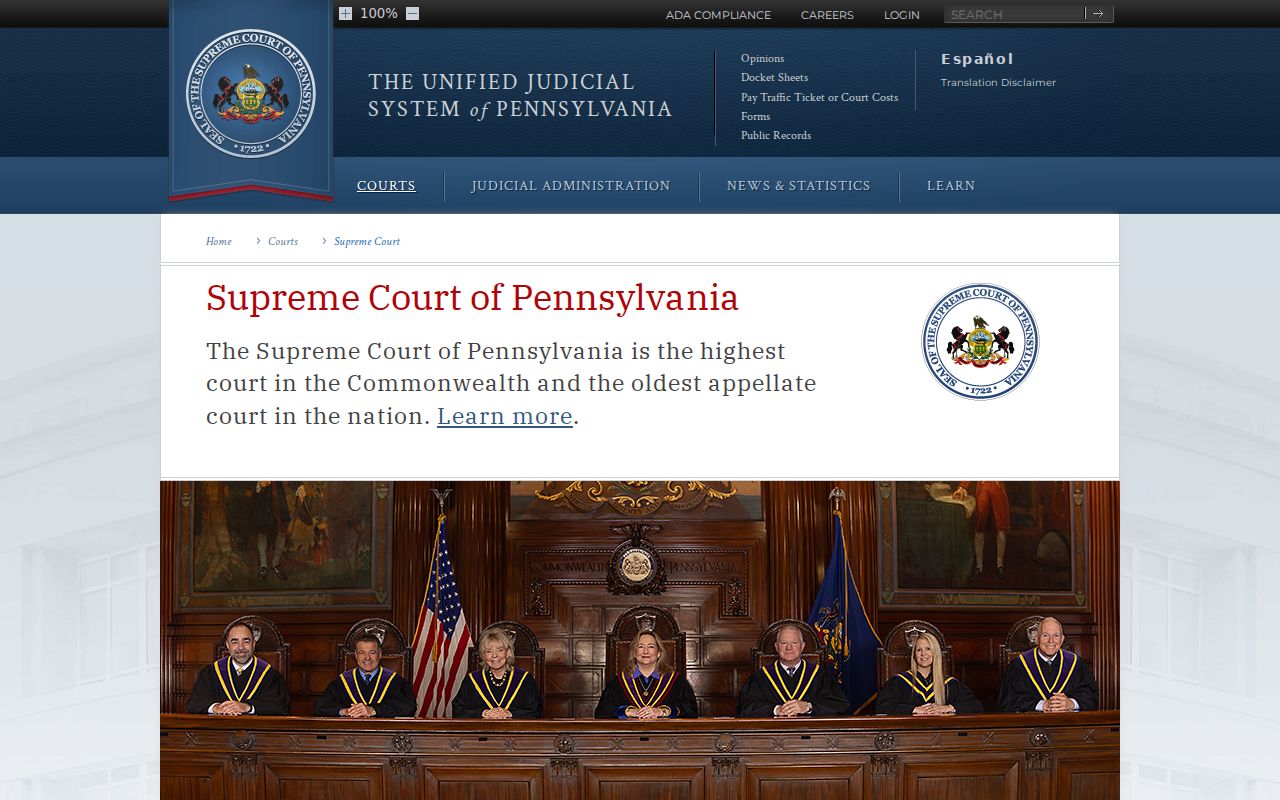
Pennsylvania has one high court for civil and criminal matters. There is no separate court of last resort for criminal appeals.
Pennsylvania Appellate Courts
Superior Court and Commonwealth Court both serve the entire Commonwealth. They are not numbered regional districts, and a county map does not decide between them. Subject matter does. Superior Court generally reviews most Common Pleas appeals in criminal, tort, contract, family, custody, and similar cases. It reviews the record for legal error rather than trying the facts again.
The official Superior Court resource supplies appellate calendars, opinions, locations, judges, and filing information.
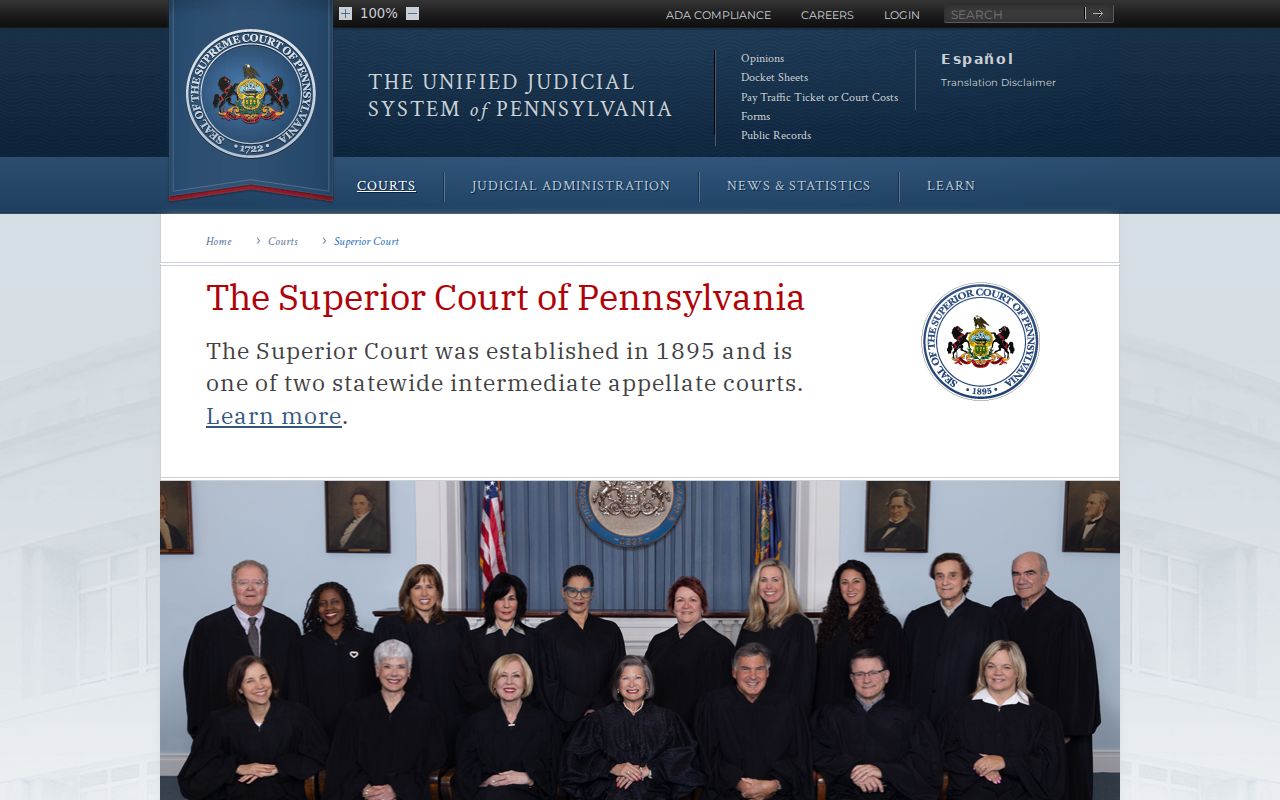
That source reflects a single statewide appellate court, so it should not be read as a county-to-district assignment map.
Pennsylvania Commonwealth Court
Commonwealth Court hears appeals and original matters involving Commonwealth agencies, state or local government, elections, zoning, regulatory action, and many administrative adjudications. Its specialized public-law jurisdiction makes it a second intermediate court, not a geographic counterpart to Superior Court.
The official Commonwealth Court source describes that original and appellate jurisdiction.
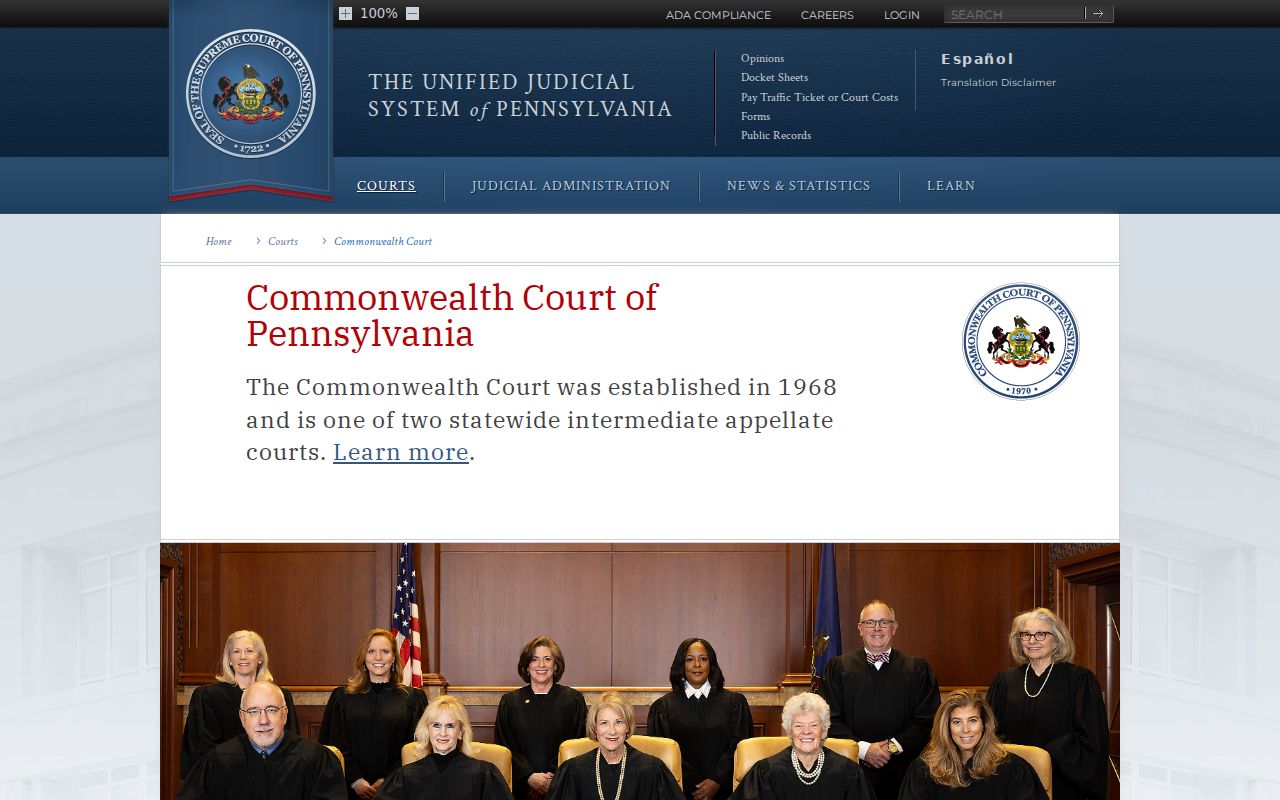
A final decision from either intermediate court may be presented to the Supreme Court through the applicable allowance or direct-review path.
| Question | Superior Court | Commonwealth Court |
|---|---|---|
| Coverage | All Pennsylvania counties | All Pennsylvania counties |
| Organizing principle | General appellate subject matter | Government and public-law subject matter |
| Typical record | Criminal conviction, tort judgment, divorce or custody order | Agency adjudication, zoning, election, unemployment, or government mandamus matter |
| Fact review | Reviews the trial record, not a new trial | Reviews the relevant record and also hears defined original matters |
| Next state level | Supreme Court by allowance or applicable direct route | Supreme Court by allowance or applicable direct route |
Pennsylvania Common Pleas Courts
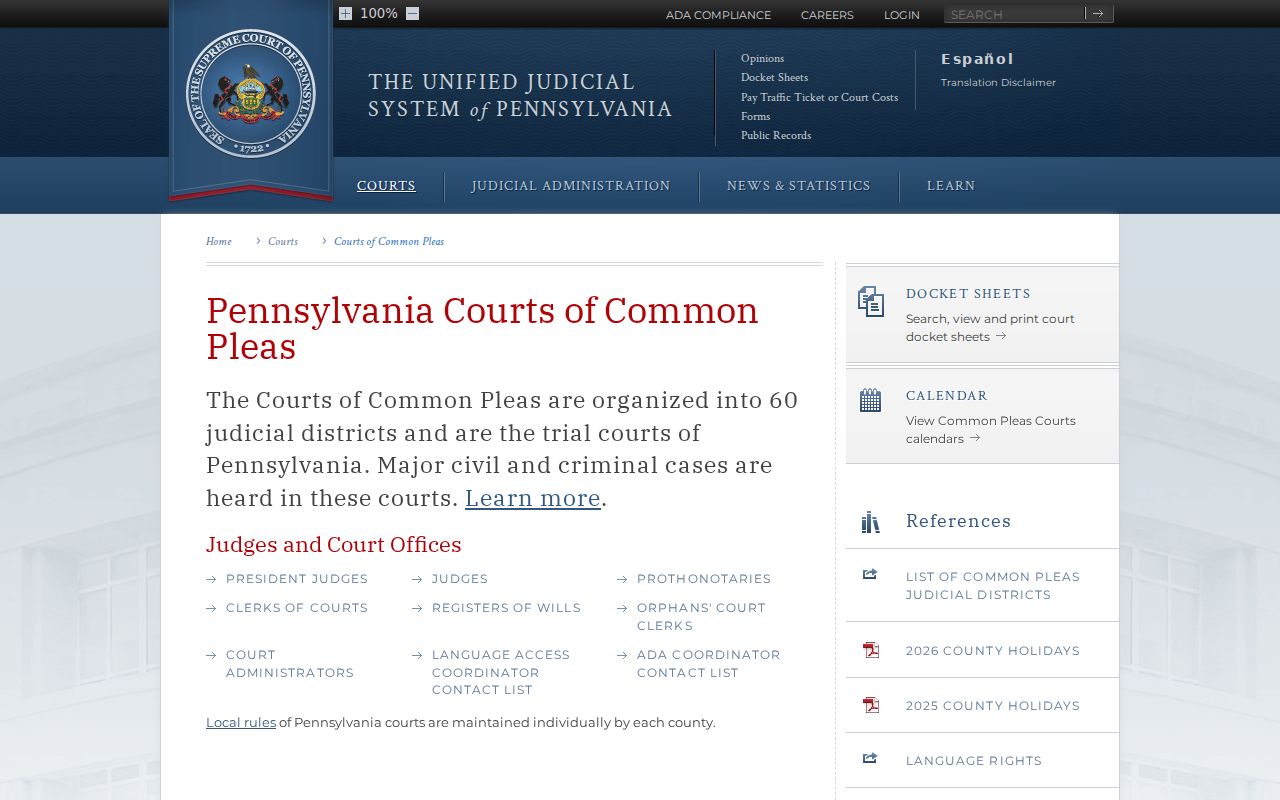
Courts of Common Pleas are Pennsylvania's general-jurisdiction trial courts. They hear felonies and serious misdemeanors, major civil actions, equitable and title matters, divorce, custody, juvenile cases, estates, Orphans' Court proceedings, guardianships, and appeals from minor courts. Divisions such as civil, criminal, family, juvenile, and Orphans' Court organize the work, but remain within Common Pleas.
Pennsylvania has 60 judicial districts across 67 counties. Seven districts pair counties: Warren and Forest, Snyder and Union, Wyoming and Sullivan, Franklin and Fulton, Juniata and Perry, Elk and Cameron, and Columbia and Montour. A shared bench does not merge county Prothonotaries, Clerks of Courts, Registers of Wills, or archives.
The UJS Common Pleas map and directory identifies all districts and county contacts.
Use the county of filing for trial records. Civil and family papers commonly route to the Prothonotary, criminal papers to the Clerk of Courts, and estates to the Register of Wills or Clerk of Orphans' Court.
Pennsylvania Minor Courts
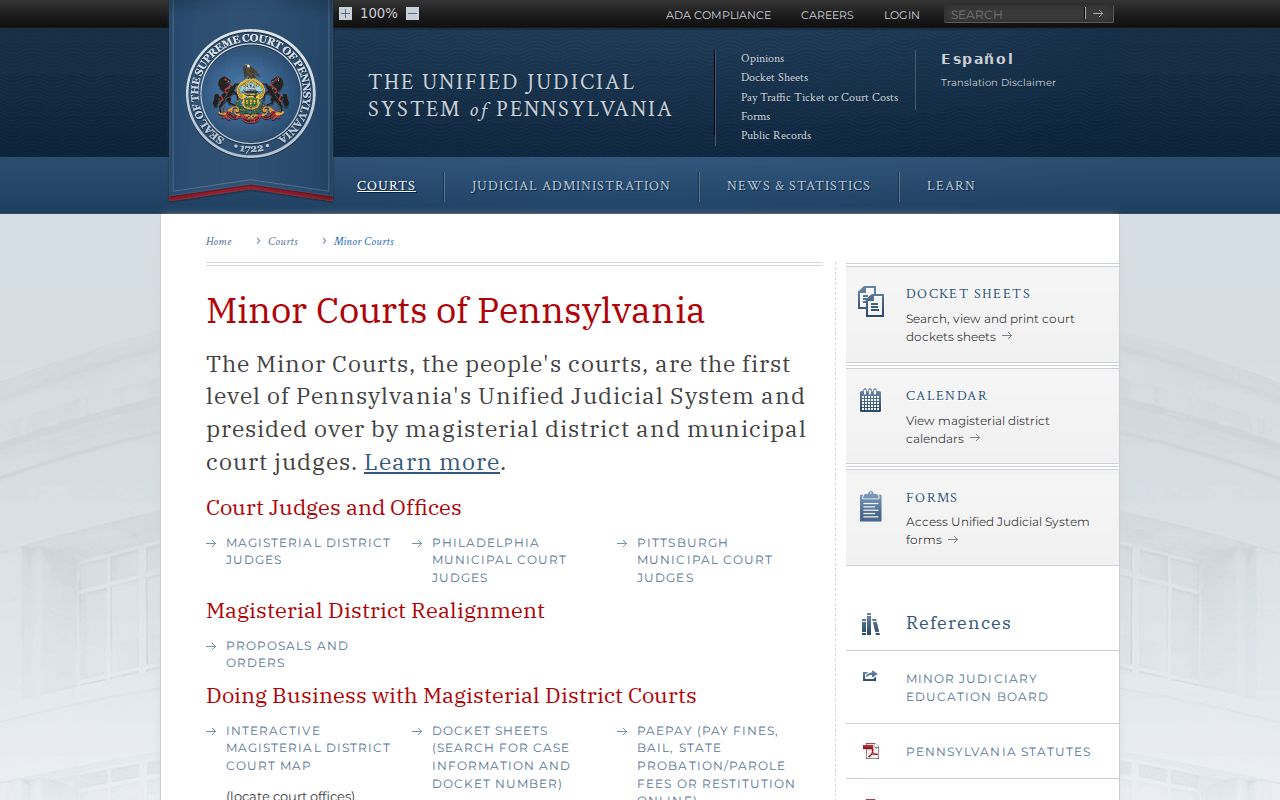
Outside Philadelphia, Magisterial District Judges handle traffic and nontraffic summary offenses, preliminary arraignments and hearings in criminal matters, landlord-tenant possession cases, and civil claims up to $12,000. A felony can begin there with a complaint and bail decision, then transfer to Common Pleas after a waiver or finding that the case should be held for court. Summary matters commonly remain in minor court unless appealed.
Philadelphia Municipal Court performs comparable local functions through specialized divisions and also handles designated criminal trials. Pittsburgh Municipal Court is different: it operates within the Allegheny County Court of Common Pleas rather than as a statewide minor-court model.
The official Pennsylvania minor-courts directory helps locate the MDJ identified on a citation or complaint.
Imminent hearings should be confirmed with the court because a public docket or calendar can lag the official schedule.
Pennsylvania Court Jurisdiction Compared
The filing type and remedy determine the proper Pennsylvania trial level. Minor courts have defined authority. Common Pleas provides general jurisdiction and hears appeals from the local tier. The appellate courts then review questions through the subject-matter route.
| Issue | Minor or Municipal Court | Common Pleas | Appellate Level |
|---|---|---|---|
| Civil | Eligible claims up to $12,000 and landlord-tenant matters | Larger, equitable, title, complex, and general civil relief | Superior or Commonwealth by subject |
| Criminal | Preliminary events, summary matters, and local designated authority | Felonies, serious misdemeanors, pleas, trials, and sentences | Usually Superior, then Supreme Court |
| Family and juvenile | Generally not the final general forum | Family and juvenile divisions | Usually Superior Court |
| Estate and guardianship | Not the estate court | Register and Orphans' Court functions within county structure | Subject-specific appellate route |
| Government or agency dispute | Limited or no role | Trial or appellate record as law provides | Commonwealth Court route often controls |
Pennsylvania Appeals Paths
A civil claim within minor-court authority can begin before an MDJ and produce a new Common Pleas proceeding on appeal under the applicable rules. A larger or equitable civil action begins in Common Pleas. A criminal case can start with an MDJ complaint, arraignment, bail, and preliminary hearing, then move to Common Pleas for information, arraignment, motions, plea or trial, and sentence.
Criminal flow: Complaint › Magisterial District Judge › Preliminary hearing or waiver › Court of Common Pleas › Superior Court › Supreme Court allowance.
General civil flow: Complaint › Court of Common Pleas › Superior Court › Supreme Court allowance.
Government-law flow: Agency or government matter › Court or adjudicatory record › Commonwealth Court › Supreme Court allowance.
Specified direct appeals and original jurisdiction can change these paths. Federal constitutional or statutory issues may eventually reach the U.S. Supreme Court after state review, but that federal record is not part of UJS Case Search.
Pennsylvania Specialty Court Programs
Local treatment courts address drug, DUI, mental-health, veterans, family or dependency, and other problem-solving needs under statewide support and standards. They do not create another appellate tier. Their records remain within the underlying criminal, juvenile, or family docket and follow that file's access restrictions.
Business programs also remain Common Pleas divisions. Specialized commerce programs in major districts do not form a separate statewide business court. A president judge manages district administration and assignments, while the Supreme Court and Administrative Office of Pennsylvania Courts oversee broader system needs.
Federal Courts in Pennsylvania
Pennsylvania has Eastern, Middle, and Western federal judicial districts, all reviewed by the U.S. Court of Appeals for the Third Circuit. Federal district courts hear federal crimes, federal-question and diversity civil cases, civil-rights suits, and other Article III matters. They do not replace Common Pleas for ordinary Pennsylvania prosecutions or county civil cases.
The Eastern District covers the eastern and southeastern region, the Middle District spans central and northeastern Pennsylvania, and the Western District covers the west. Each has a corresponding bankruptcy court. PACER provides federal docket and document access under its current registration and fee rules.
The Third Circuit also reviews federal districts in New Jersey, Delaware, and the Virgin Islands. State and federal cases can concern the same event but retain different case numbers, prosecutors, custodians, and filing systems.
Pennsylvania Court System History
The Supreme Court traces its roots to the Provincial Court established in 1684 and is often described by the judiciary as the nation's oldest appellate court. Superior Court was created in 1895 to reduce the Supreme Court's appellate workload. Commonwealth Court began operating in 1970 as a specialized statewide forum for government and public-law matters.
The 1968 Pennsylvania Constitution created the modern Unified Judicial System under Supreme Court administrative authority. Later automation linked appellate PACMS, Common Pleas criminal CPCMS, and MDJS. Public web docket access began with appellate sheets in 2001 and expanded, but electronic discovery still does not replace the filing office's certified record.
Find Pennsylvania County Courts
Use the directory of all 67 Pennsylvania counties to reach the filing county's court and record office. The county site identifies the Prothonotary, Clerk of Courts, Register of Wills or Orphans' Court clerk, and local minor courts. A shared judicial district still preserves separate county record offices.
The statewide portal is a discovery layer. The court that created the file remains the certified-record layer. Ask for the exact docket, document, copy type, and current cost. For an imminent hearing, confirm directly with the courtroom or court office rather than relying on an old calendar screen.