
Pennsylvania Arrest Records and Charges
A Pennsylvania arrest record documents the police or booking side of an event. It may identify the person, arresting agency, arrest date, initial basis for custody, booking charge, and bond information that the agency may release. Those labels are not final prosecution decisions. The criminal complaint is the ordinary court charging document. Once filed before a Magisterial District Judge or Philadelphia Municipal Court, it receives a court docket and an OTN connection. The district attorney then represents the Commonwealth and can approve, amend, withdraw, or proceed with charges.
Booking data, court charge records, and final criminal case results answer different questions. A county jail may show the intake reason and current hold. The court docket shows filed counts and later status. The full Pennsylvania criminal court record continues through plea, trial, sentence, and appeal. Court charges after arrest can differ sharply from the booking label because screening and preliminary proceedings may add, reduce, withdraw, or dismiss counts. A person can also remain jailed on another detainer after one case permits release.
Record split: Police or jail holds arrest and booking material; the filing court holds charge papers; PSP compiles reportable statewide criminal history.
Search Pennsylvania Arrest Records
There is no separate public, real-time Pennsylvania arrest database that combines every local booking. Start with UJS Case Search for filed court charges, then use the relevant county for same-day booking and agency material. UJS can search public MDJ and Common Pleas criminal data by participant and several identifiers, including docket, complaint, OTN, or incident criteria where offered. Early charges may appear only at minor-court level. A later prosecution may have a linked CP docket. Portal absence can mean filing lag, a restricted record, wrong criteria, or no public electronic index.
- Record the full name, county, approximate arrest date, agency, and any OTN, complaint, incident, booking, or docket number.
- Search UJS in both Magisterial District Court and Common Pleas. Compare the OTN and originating-court reference before treating results as one case.
- Read every count's statute, grade, and newest status. Check later entries for amendments, dismissal, plea, appeal, or sentence changes.
- Use the directory of all 67 Pennsylvania counties to contact the filing MDJ, Clerk of Courts, jail, or arresting agency for the source record.
- For statewide Pennsylvania history, select the correct PATCH product. Use subject-only Access and Review when completeness or correction matters.
Same-day data changes fast. A person may be arrested before jail intake posts, released before a roster refresh, transferred, or held on another case. UJS filing can trail police action, and PSP may await fingerprint or disposition reporting. For a live deadline, bail status, or release question, confirm with the named court or facility. A saved search result is not a guarantee of current custody or charge status.
Note: Search results may lag an arrest, so call the Pennsylvania jail or filing court when custody or a response deadline is urgent.
Pennsylvania Charging Documents
Pennsylvania does not ordinarily use a federal-style grand-jury indictment as the standard charge path. Police begin the judicial process with a sworn criminal complaint stating offenses and probable-cause allegations, subject to sealing and confidentiality rules. The preliminary hearing tests whether the Commonwealth has made a prima facie showing. If charges are held or waived for court, the district attorney files an information in Common Pleas. An investigating grand jury may issue a presentment recommending charges, but grand-jury material remains secret except as law or court order permits.
| Document | Source and Role | Place in Pennsylvania Process |
|---|---|---|
| Criminal complaint | Police submit the sworn initiating accusation to the issuing authority. | Ordinarily starts the minor-court case and identifies initial statutes and probable cause. |
| Information | The district attorney files the formal count-by-count charging paper. | Becomes the operative Common Pleas count list after waiver or holding for court, subject to amendment. |
| Grand-jury presentment | An investigating grand jury recommends charges based on its investigation. | Can lead to a complaint or information; it is not Pennsylvania's routine public charging indictment. |
A public docket may name a complaint, affidavit, information, or presentment without opening every underlying page. The filing MDJ supplies available preliminary papers. The county Clerk of Courts supplies the Common Pleas information and later orders. Ask which affidavits or grand-jury material remain sealed.
Pennsylvania Charge Codes and Status
A useful court charge record shows the count sequence, statute section and subsection, offense text, grade, offense date, OTN, and latest disposition. Pennsylvania grades include first-, second-, and third-degree felonies and misdemeanors, summary offenses, murder categories, and ungraded crimes with statute-specific limits. Grade affects exposure but does not establish a sentence. One arrest can yield several counts at different grades, and some counts can merge for sentencing while their separate outcomes remain on the docket.
- Held for court or waived for court
- The matter advances from preliminary proceedings to Common Pleas. Neither status means guilt.
- Withdrawn or dismissed
- The prosecution withdrew the count or the court ended it at that stage.
- Nolle prosequi
- The prosecutor formally chose not to proceed under the applicable procedure.
- ARD
- Accelerated Rehabilitative Disposition is pretrial diversion, not a conviction, though the record remains until qualifying dismissal and expungement processing.
- Amended or reduced
- The count or grade changed. Use the newest charge table and later disposition rather than the booking label.
"Refused" or "declined" may stay in a police or prosecutor workflow and never become a public court docket. "No-billed" is not normal Pennsylvania docket vocabulary because the Commonwealth generally prosecutes by information, not routine indictment.
Note: A Pennsylvania booking charge can change before filing, at the preliminary hearing, or when the district attorney files the information.
Pennsylvania Charges vs. Convictions
An arrest proves only that police took action. A filed charge remains an accusation. A conviction follows an accepted guilty or nolo contendere plea or a guilty verdict and judgment. Pennsylvania arrest records and charge dockets may lawfully preserve allegations that ended in withdrawal, dismissal, acquittal, or diversion until relief rules change public access. Accuracy requires stating the stage and outcome together, not repeating the first label found.
| Charge | Conviction | |
|---|---|---|
| Meaning | An alleged violation in a complaint or information | A guilty result accepted or entered by the court |
| Evidence in record | Count line, statute, grade, and status | Plea or verdict, disposition, judgment, and sentence |
| What can follow | Amendment, withdrawal, dismissal, hearing, or trial | Sentence, post-sentence motion, appeal, or collateral review |
A docket can hold mixed results. One count may be guilty while another is dismissed. A conviction may later be vacated or remanded. Always read the event chronology and the newest disposition for each count.
Pennsylvania Sealed vs. Expunged Records
Dismissal does not automatically erase every court and agency copy. Pennsylvania limited access and Clean Slate block qualifying records from ordinary public and most noncriminal-justice dissemination while preserving access for authorized users. Expungement directs removal or destruction in defined circumstances under the order and statute. Nonconviction information, some summary and age-based categories, ARD completion, and other qualifying situations can follow distinct routes. Current eligibility depends on the charge, history, completion, restitution, and later record.
| Sealed or Limited Access | Expungement | |
|---|---|---|
| Public effect | A seal follows its order; limited access hides qualifying records from ordinary public release | Qualifying information removed as law and order direct |
| Agency effect | Criminal-justice and statutory access can remain under limited access | Only limited lawful retention or uses may remain |
| Process | Petition under Section 9122.1 or automated Section 9122.2 treatment | Order under Section 9122 or another qualifying rule |
Obtain every UJS docket and a subject-only PSP Access and Review, then file approved forms in the Court of Common Pleas for the prosecution county. After an order, allow processing time and check both UJS and PSP. Use the current Pennsylvania Crimes Code Chapter 91 rather than relying on a short eligibility summary.
Pennsylvania Arrest Record Channels
The court, jail, police, and prosecutor do not hold interchangeable copies. Request the complaint and preliminary docket from the filing MDJ. Request the information, orders, and certified disposition from the Clerk of Courts. Ask the county jail for permitted intake, release, bond, or hold information. Ask the arresting agency's Open Records Officer for a specific existing agency record, while expecting criminal-investigation, witness, victim, and evidence material to be withheld or redacted.
The Right-to-Know Law does not replace judicial case-record procedure. The Pennsylvania Office of Open Records explains the agency-record route, including why the correct custodian matters.
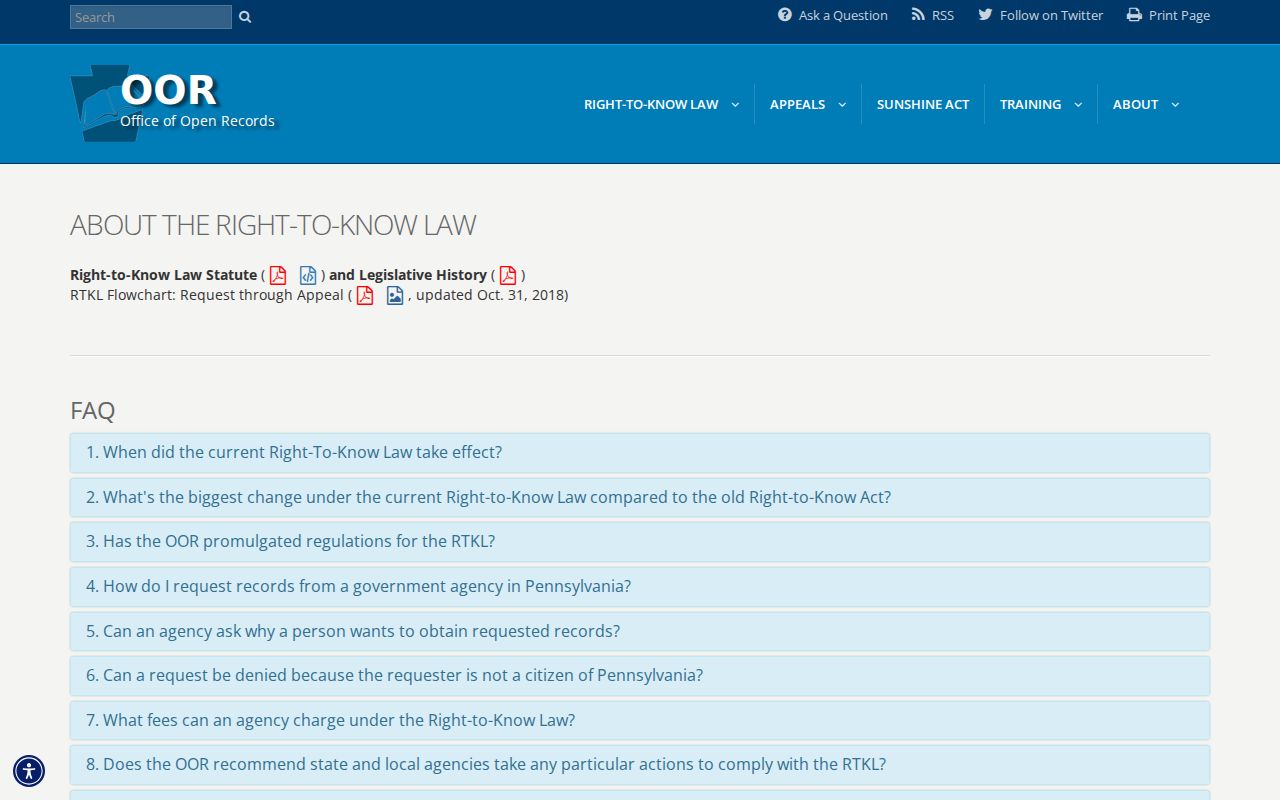
A public criminal complaint can be available from the court while the police report, video, witness statement, or evidence log remains protected.
When an agency request is proper, the official Pennsylvania Right-to-Know request form records the agency, exact records sought, contact information, delivery choice, and certification request.
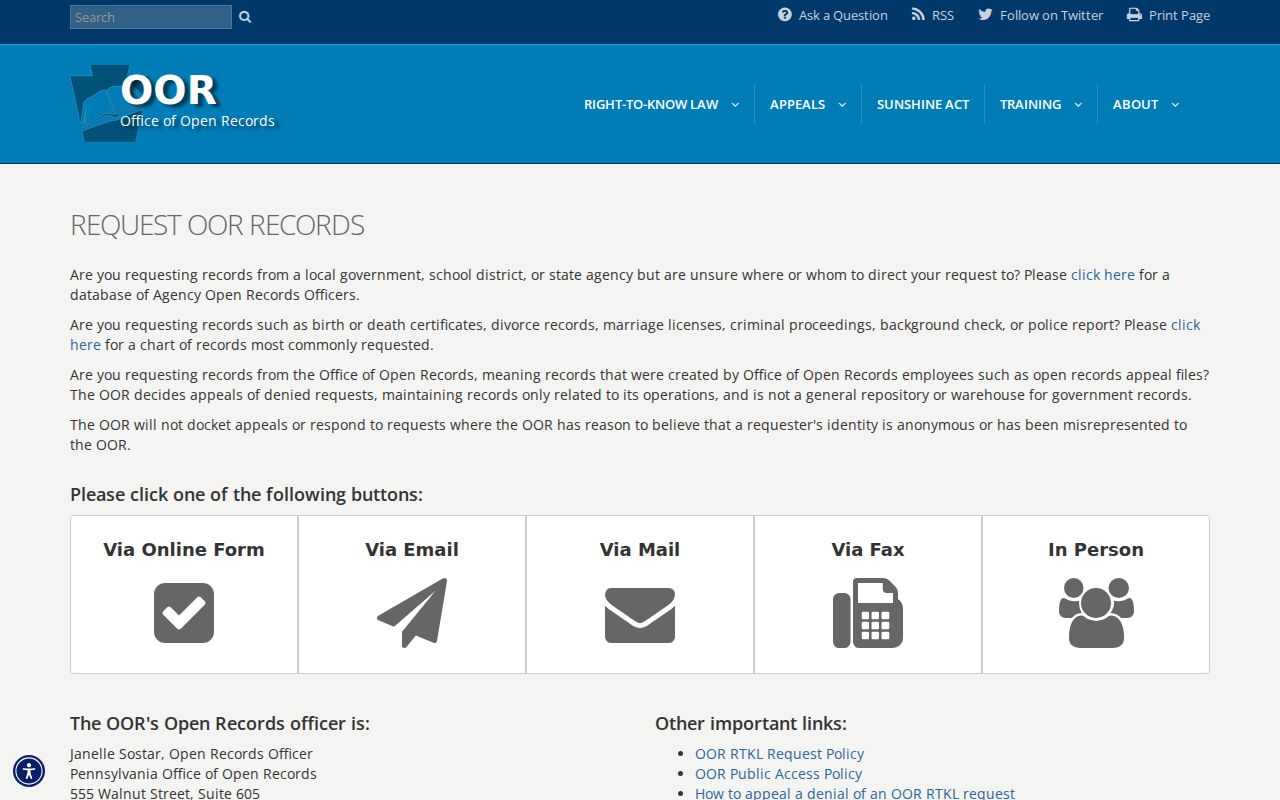
Describe existing records with enough detail and send the form to that agency's Open Records Officer, not to OOR as a substitute records warehouse.
Pennsylvania PATCH Charge History
The Pennsylvania State Police Central Repository holds Pennsylvania law-enforcement arrests, formal charges, and reported dispositions linked to a subject. PATCH provides the official standard criminal-history check. It is statewide within Pennsylvania, but it excludes federal, FBI, and other-state records. Standard dissemination is filtered by Section 9121 and can omit nonconviction information. It also lacks the document depth of a county court file. The filing court remains the source for a complaint, information, plea, or certified disposition.
A standard check costs $22, and optional notarization adds $5. A qualifying volunteer request is free and cannot be notarized. The subject-only SP 4-170 Access and Review costs $20, is mail only, and provides the fuller Pennsylvania record for review and challenge. An online "Request Under Review" is a manual match step, not evidence of guilt. Keep the control number and request date to retrieve status and the final certificate.
PATCH matching may use name, date of birth, sex, race, aliases, and other secure fields shown in the request flow. Sensitive details belong only in the official portal or current PSP mail form. If repository data conflicts with court records, compare Access and Review with a certified disposition, then use PSP's challenge route and ask the Clerk of Courts to correct an erroneous reported outcome.
Verify Pennsylvania Arrest Results
Identity errors can cause serious harm. Match several non-sensitive anchors, such as county, approximate date, middle initial, agency, attorney, offense, OTN, and related docket. Never publish or repeat an accusation from a common-name match alone. Download a fresh docket, check later entries, and state whether the item is an arrest, booking label, pending count, dismissal, diversion, acquittal, or conviction.
The official Pennsylvania Megan's Law county search is a separate purpose-built registry, not a general arrest-record or criminal-background database.
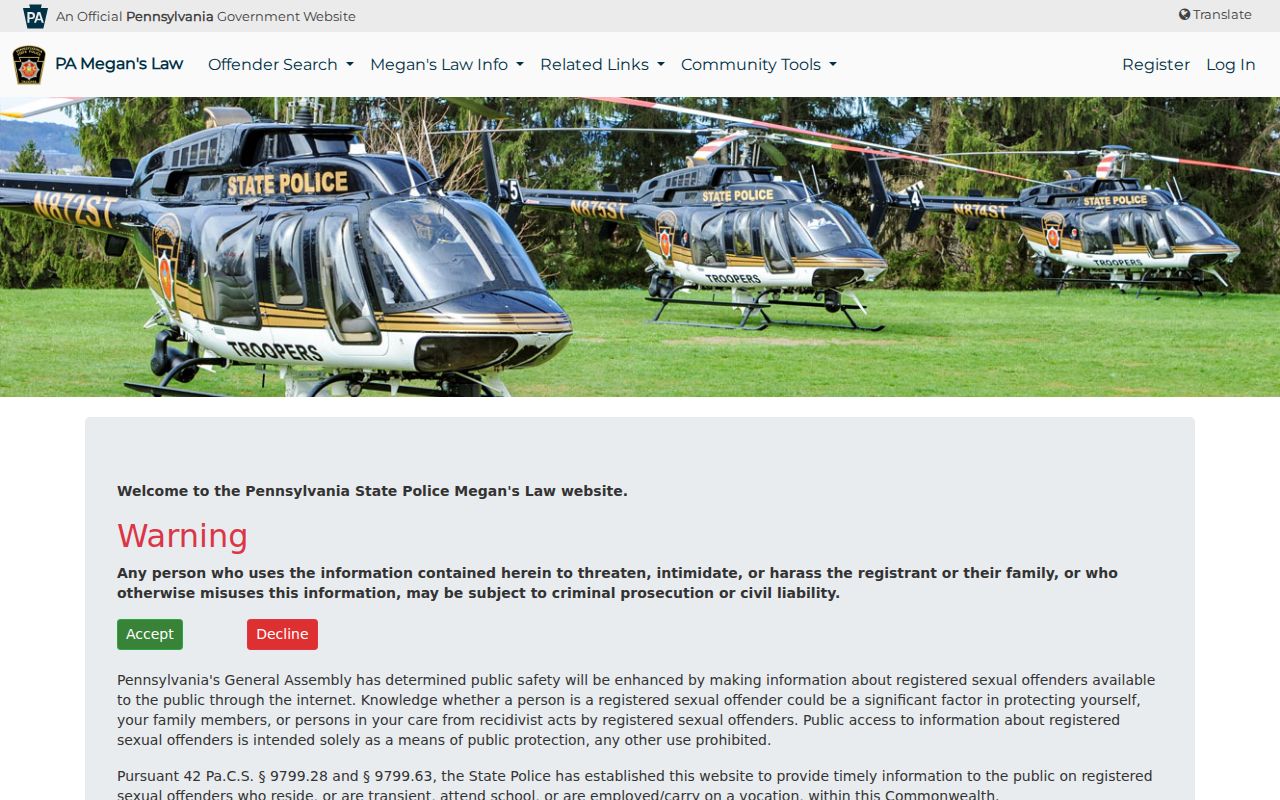
A registry result reflects that statutory system only. Absence there does not clear a person's broader Pennsylvania arrest or court-charge history.
Important: Public arrest and charge searches are not FCRA consumer reports and cannot support employment, housing, credit, insurance, or tenant decisions.
Restricted Pennsylvania Charge Records
Juvenile files are limited under 42 Pa.C.S. Section 6307, with narrow statutory exceptions. Sealed affidavits, grand-jury matter, investigative work product, victim and witness information, and records covered by a court order can also be withheld. Public versions redact Social Security numbers, financial accounts, minors' identifiers, protected addresses, and medical material. A docket line naming a confidential filing does not open its contents.
For available source papers, route by filing county. The MDJ handles the complaint and preliminary material, the Clerk of Courts holds Common Pleas charge papers and outcomes, and the local jail or police agency controls permitted booking and incident records. Ask for current copy and certification fees because Pennsylvania has no uniform county charge-file copy total.
Note: A missing public search result can reflect delay or restricted access, so confirm with the Pennsylvania office that created the record.